Why Crypto Projects Must Prioritize Users Over Tech:
By Hamadex_Entechnologue, Consumer Researcher& Crypto Contributor
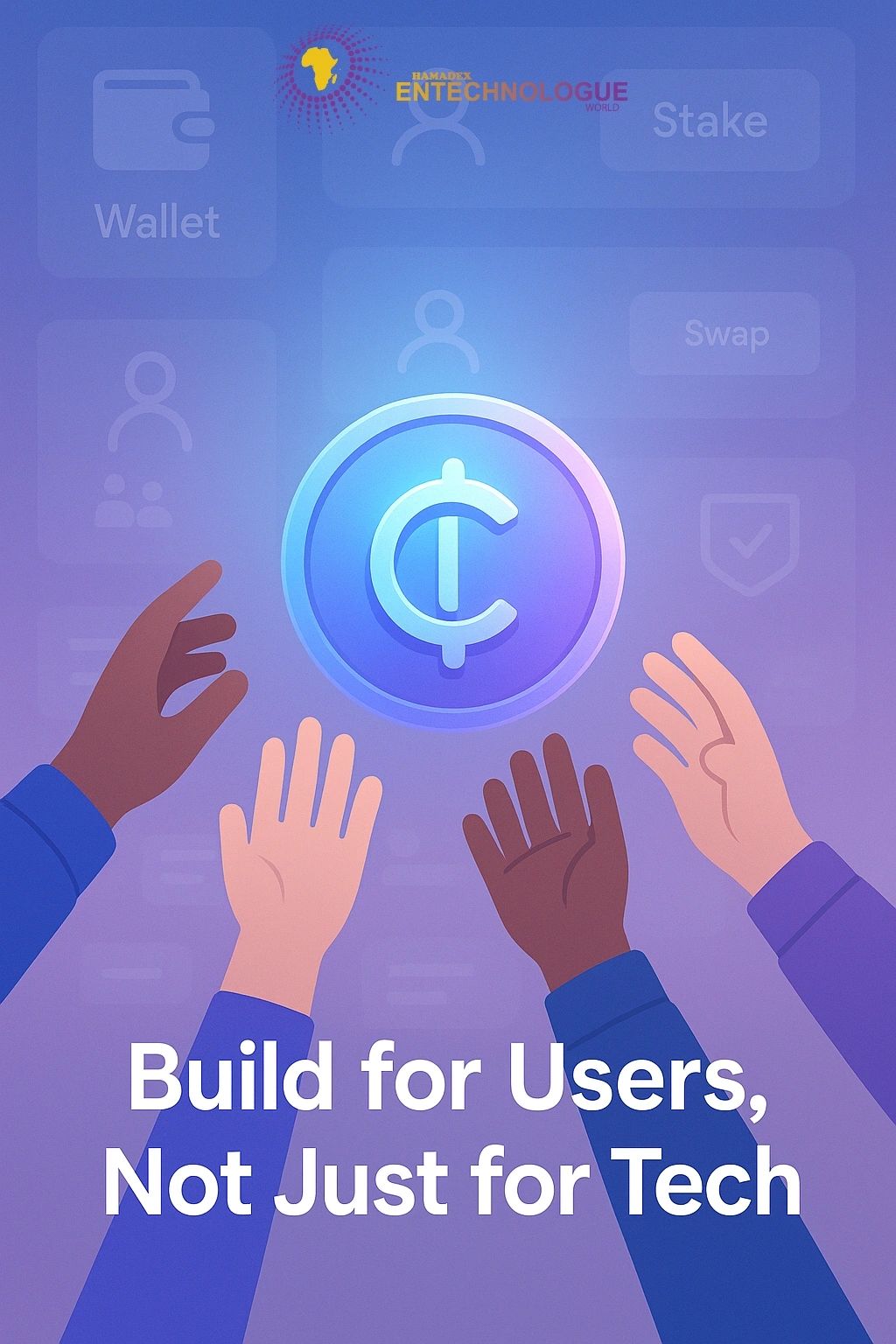
Build for users not just for tech
In the fast-paced world of cryptocurrency, projects often race to build the most advanced technology, be it a lightning-fast blockchain, a groundbreaking DeFi protocol, or a feature-packed NFT platform. But as a consumer researcher with years of experience as both a user and contributor in the crypto space, I’ve seen a hard truth: no matter how revolutionary your tech is, it’s doomed to fail if it doesn’t resonate with users.
Having navigated the crypto ecosystem, I know what makes me stick with a project and what sends me running. My mission is to simplify these insights for projects and users alike, helping build platforms that people love. In this post, I’ll share a framework for crypto projects to improve their user experience (UX), covering interfaces, mechanics, and product-market fit. Because in crypto, understanding your users isn’t just important ▪︎it’s everything.
The User-Centric Edge in Crypto
Crypto is a competitive jungle. With thousands of projects vying for attention, the ones that thrive are those that make users feel valued, understood, and empowered. A seamless UX can boost adoption, increase Total Value Locked (TVL), and foster loyal communities that drive organic growth. Conversely, a clunky interface or confusing mechanics can tank even the most promising protocol.
As a consumer researcher, I analyze what makes users sticks. Why do they adopt a project? What frustrates them? What keeps them engaged? By blending my hands-on crypto experience with research methods, I help projects bridge the gap between complex tech and real-world users. Here’s how you can do it too.
Craft an Intuitive Interface
The interface is a user’s first impression of your project. A confusing or outdated UI can scare people away faster than a bear market. Whether it’s a decentralized app (dApp), wallet, or marketplace, your interface needs to be simple, trustworthy, and accessible.
What to Focus On:
Onboarding: Make signing up or connecting a wallet as easy as possible. Avoid overwhelming users with technical steps.
Navigation: Ensure core features like swapping tokens or staking are easy to find. Avoid cluttered layouts.
Accessibility: Cater to both crypto newbies and veterans with clear labels, tooltips, and multilingual options.
Mobile Optimization: With mobile crypto usage soaring, ensure your platform works flawlessly on smartphones.
Aesthetics: A modern, clean design signals credibility in a space rife with scams.
How to Improve:
Simplify onboarding with step-by-step guides or one-click wallet integrations (e.g., WalletConnect).
Use A/B testing to experiment with button placements or color schemes.
Add feedback loops, like in-app surveys, to pinpoint friction points.
Example: Uniswap’s success partly comes from its clean, intuitive interface for token swaps and Hot protocol is repeating thesame. With minimal steps and clear visuals, it reduces user drop-off and keeps people coming back.
Design Mechanics That Engage
Mechanics—the nuts and bolts of how your project works are the engine of user engagement. Whether it’s tokenomics, transaction costs, or gamified features, your mechanics need to incentivize participation while being sustainable and transparent.
What to Focus On:
Tokenomics: Ensure rewards (e.g., staking or yield farming) are appealing and sustainable. Align them with user goals, like passive income or active trading.
Transaction Costs: High gas fees or hidden costs can deter users, especially small investors.
Performance: A slow or unreliable platform frustrates users. Transactions should be fast and dependable.
Gamification: Fun elements like leaderboards or referral bonuses can boost retention.
Security: Transparency about audits and security measures builds trust in a skeptical industry.
How to Improve:
Integrate Layer 2 solutions (e.g., Near,Sol,Base,Arbitrum or Optimism) to lower transaction costs.
Design tokenomics that reward long-term engagement, like tiered staking benefits.
Add gamified features, like PancakeSwap’s lottery system, to make interactions enjoyable.
Clearly communicate security practices, such as third-party audits.
Example: Aave’s clear lending and staking mechanics, paired with transparent risk metrics, make it easy for users to engage confidently, driving its DeFi dominance.
Build Products Users Love
Even the best interface and mechanics won’t save a project that doesn’t resonate with its audience. Your product must solve a real problem and communicate its value clearly to the right users.
What to Focus On:
Problem-Solving: Does your project address a clear pain point, like high fees or lack of financial access?
Target Audience: Is your platform designed for your intended users, be it DeFi enthusiasts, NFT collectors, or retail investors? Is your messaging aligned?
Competitor Analysis: How do you stack up against rivals in features, UX, or rewards? What makes you unique?
Feedback Channels: Are you actively listening to users via Discord, X,Telegram or governance forums?
How to Improve:
Create user personas to map out the needs of different audience segments (e.g., beginners vs. advanced traders).
Run surveys or focus groups to test what users value, like low fees or high yields.
Differentiate with unique features, like Curve’s focus on stablecoin swaps or Notcoin play-to-earn model.
Engage your community through AMAs, governance voting, or X campaigns to make users feel heard.
Example: Chainlink’s success stems from solving a critical problem -reliable oracles and clearly communicating its value to developers and users, ensuring strong product-market fit.
Tools to Understand Your Users
To turn insights into action, use these research tools and methods:
Surveys and Polls: Tools like Google Forms or Typeform can collect feedback on specific features. Post polls on X or Discord for quick insights.
Analytics: Platforms like Dune Analytics or Flipside Crypto reveal user activity, transaction volumes, and retention trends.
Heatmaps: Tools like Hotjar show how users interact with your interface, highlighting where they click or drop off.
Sentiment Analysis: Monitor X posts or Telegram chats to gauge how users perceive your project.
User Interviews: Conduct 1:1 conversations to dive deep into user motivations and pain points.
By combining these tools with your intuition, you can uncover what users truly want and need.
Why User-Centricity Wins
In crypto, user experience isn’t a nice-to-have it’s a make-or-break factor. Projects that prioritize users see:
Higher Adoption: Intuitive platforms attract more users, driving TVL and token value.
Stronger Communities: Engaged users become advocates, spreading the word organically.
Competitive Advantage: In a crowded market, a user-friendly project stands out.
As I’ve learned from my own journey in crypto, the features that keep me engaged—clear UX, fair rewards, and active communities are what drive long-term success. Projects that ignore these risk fading into obscurity, no matter how advanced their tech.
Putting It Into Action
Ready to make your crypto project more user-centric? Start small:
Test and Iterate: Launch a beta version of a new feature and gather feedback before going big.
Listen Actively: Use X polls or Discord discussions to identify pain points.
Prioritize Quick Wins: Fix a confusing button label or add a tooltip it can make a big difference.
For bigger changes, like revamping tokenomics or targeting a new audience, lean on data from analytics and user interviews to guide your decisions.
Let’s Build Crypto People Love
As a consumer researcher, I’m passionate about simplifying crypto and helping projects succeed by putting users first. Whether you’re a developer, founder, or enthusiast, I’d love to collaborate on creating platforms that users can’t resist. Want to improve your project’s UX, mechanics, or product fit? Reach out—let’s make crypto better together.
Connect with me on [X/Twitter: @HEntechnologue or via Email entechnologue@gmail.com to discuss your project!